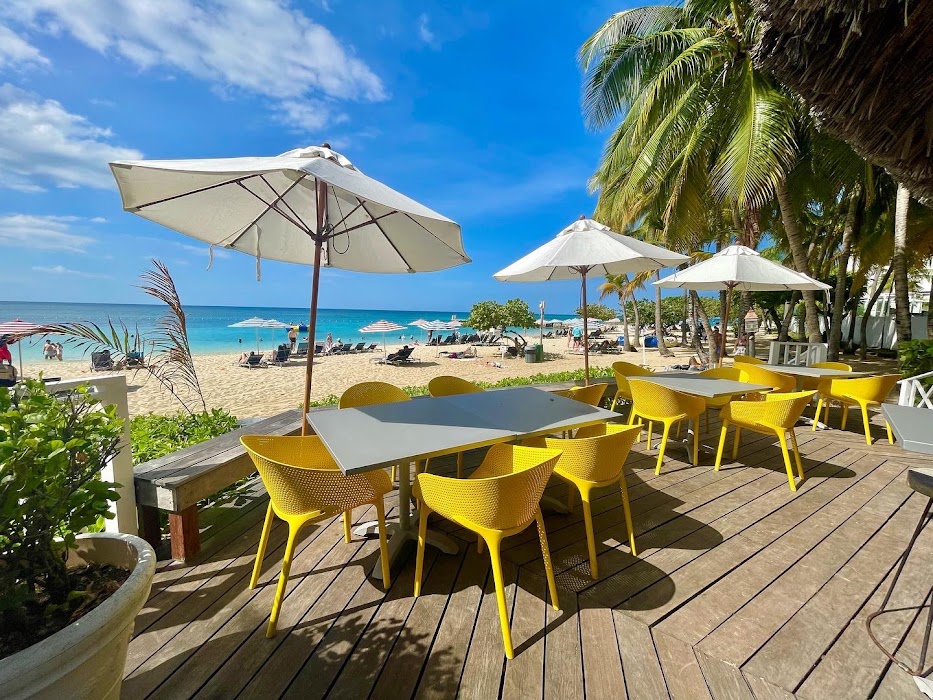
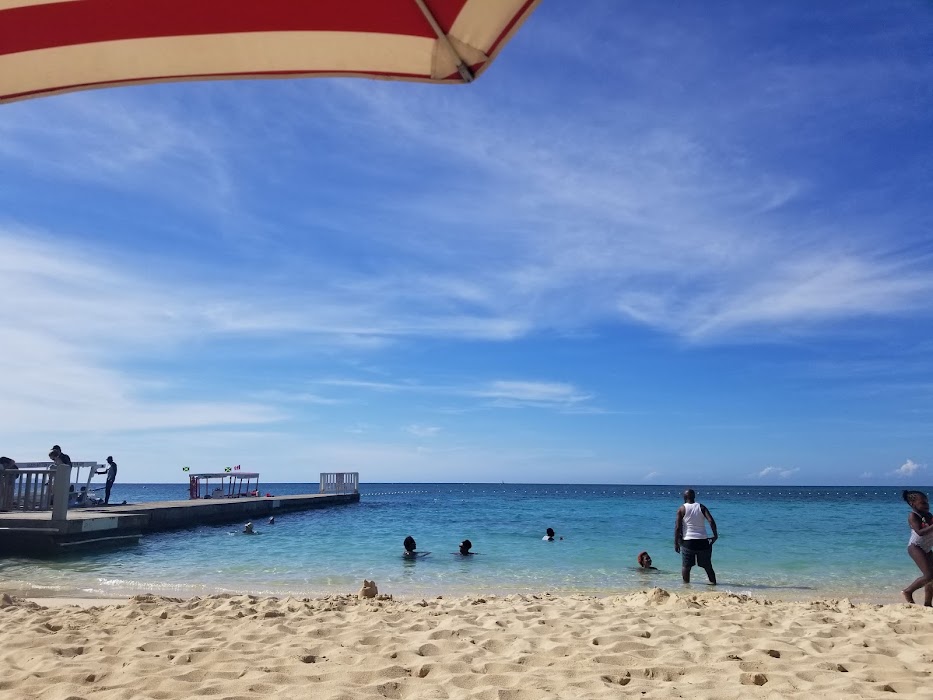
Doctor's Cave Bathing Club is not the beach. It is the private members' club that owns and runs the beach, formed in 1906 when a Montego Bay doctor gave his shoreline away. Members pay an annual subscription and get on the sand at 6am, two and a half hours before the gate opens to everyone else. The club also quietly pays for the restoration of historic buildings around the town, which is not something you would guess from the entrance kiosk.
History
A doctor gives away his beach
Alexander James McCatty opened a sanatorium in Montego Bay in 1880 and let his friends bathe on the small strip of sand below it. They reached it through a cave in the rock, and since most of them were medical men the name stuck to the place rather than to any of them. In 1906 McCatty donated the property outright, and a bathing club was founded on it. That transfer is the club's founding act and the reason it exists as a body rather than as a business.
The cave itself was destroyed by a hurricane in 1932. The club rebuilt around the gap and kept the name. What made the beach internationally famous, the endorsement of the British bonesetter Sir Herbert Barker in the early 1920s and his claim that the water had curative powers, is covered properly in our piece on Doctor's Cave Beach itself.
What a bathing club actually is
This is the part that confuses visitors, and it explains the fee. Doctor's Cave is a private members' club that admits the public on payment, not a public beach that happens to charge. The members' subscription is the club's original financing model, dating to 1906, and the day gate is the addition. It is why staff keep vendors off the sand and why the beach is groomed in a way free beaches on this coast are not: the club answers to a Managing Committee and a membership, not to a tourism ministry.
The environmental record follows from the same structure. Doctor's Cave was among the first group of Jamaican properties put forward for Blue Flag certification, the international standard for beach water quality and management, in a push reported in 2004. The beach also sits inside the Montego Bay Marine Park.
The club as the town's quiet patron
Here is the fact almost nobody knows. The bathing club spends money on Montego Bay's built heritage.
The Dome, the hexagonal yellow brick tower at Creek Street, was built in 1837 to protect the Bay Creek spring, the town's main fresh water source, with a keeper who controlled access and took payment. Piped water arrived in 1893 and many residents kept using the spring anyway. The club funded the Dome's restoration in 2005.
St James Parish Church, built between 1775 and 1782, is one of the oldest standing buildings in the parish. The club began funding roof and structural repairs there in 2024, dealing with termite damage and water getting in, and the work was completed in 2025 using termite resistant materials.
The Montego Bay Cultural Centre began life as a courthouse in 1803, was gutted by fire in 1968, and now runs as a museum. The club entered a partnership with it in June 2025 and funded a children's Summer Skills workshop the following month. A beach club that pays for a parish church roof and a children's workshop is an unusual institution, and it is the honest reason to think of Doctor's Cave as more than a turnstile.
What it costs and when it opens
Two different prices apply depending on which side of the club you are on.
Day visitors pay at the gate, around US$8 for anyone 12 and over and around US$4 for under 12s, for opening hours of 8:30am to 5:30pm, seven days. Chairs, umbrellas and lockers are rented separately.
Members pay an annual subscription, reported at roughly US$201 a year for an individual and around US$290 a year for a family, though you should confirm the current figure with the club. Subscriptions fall due on 1 January each year. Membership includes gym access and, most usefully, beach access from 6am to 6pm rather than 8:30am to 5:30pm. Applications are not automatic: the Managing Committee reviews them at a monthly meeting and you are not a member until they accept you.
What it is actually like
As a day visitor, it is a managed beach with changing rooms, showers, lockers, lifeguards, a bar, a grill and staff who keep hawkers out. As a member, it is a different proposition entirely: an empty beach at sunrise, a gym, and the same water before any cruise passenger has cleared the pier. If you are in Montego Bay for a season rather than a week, the arithmetic on the subscription is worth doing.
Hurricane Melissa struck western Jamaica on 28 October 2025 as a Category 5. The beach is operating, but repair work has continued into 2026, including on the jetty, and that can mean noise from power tools on a given morning. Ask when you book if quiet matters to you.
Membership is not a same day transaction. If you want it, download and submit the application in advance, because approval waits on the next committee meeting.
How it fits a day
For a visitor, treat the club as the gate to a morning beach, roughly 9am to 1pm, then walk the Hip Strip. For anyone staying longer, the club is the reason to build a routine instead of an itinerary: 6am swim, gym, and the rest of the day free. The heritage sites the club has paid to keep standing, the Dome, the parish church and the Cultural Centre, are all within a short drive downtown and make a genuinely good half day of their own.