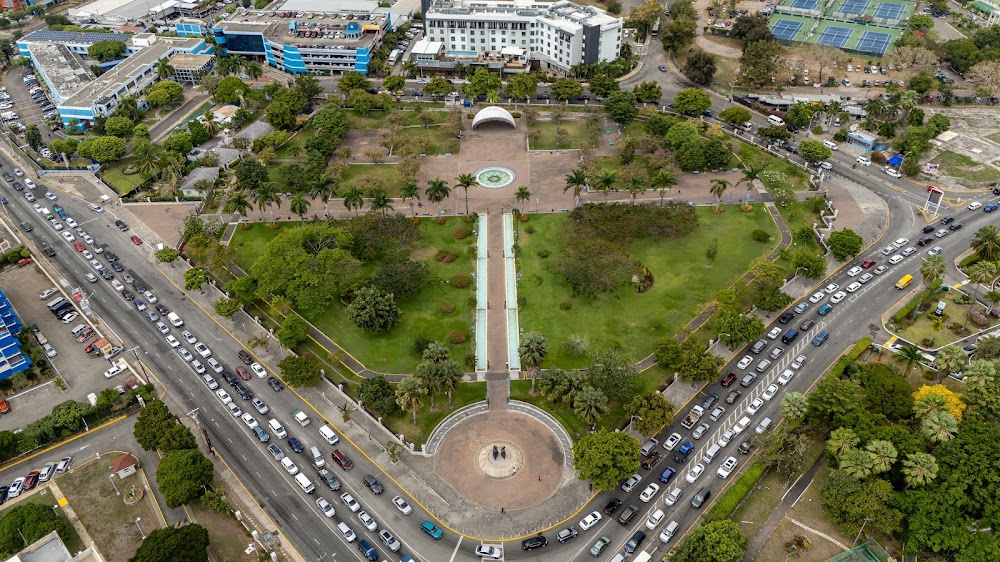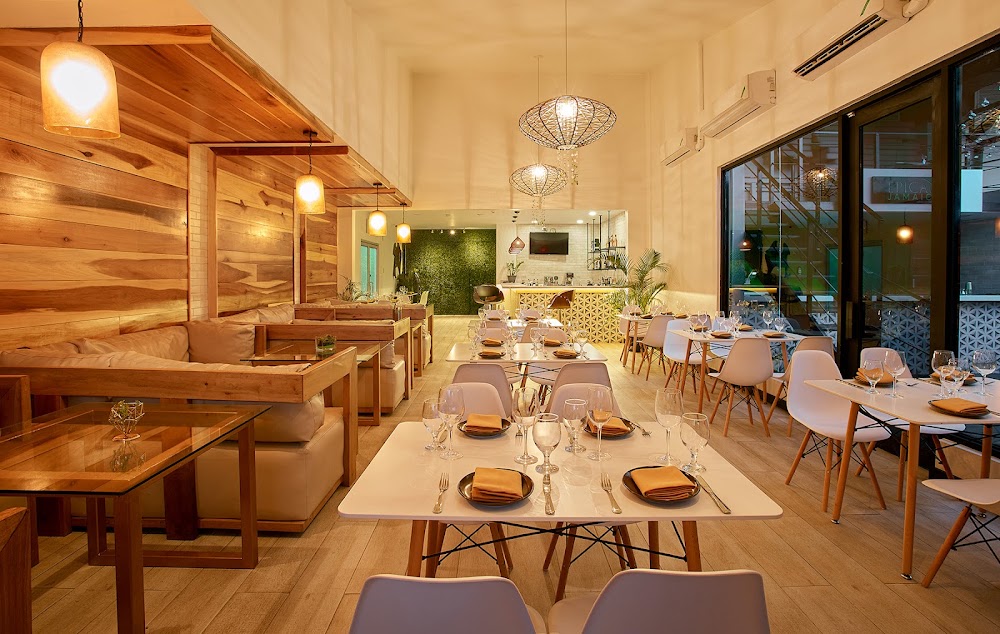
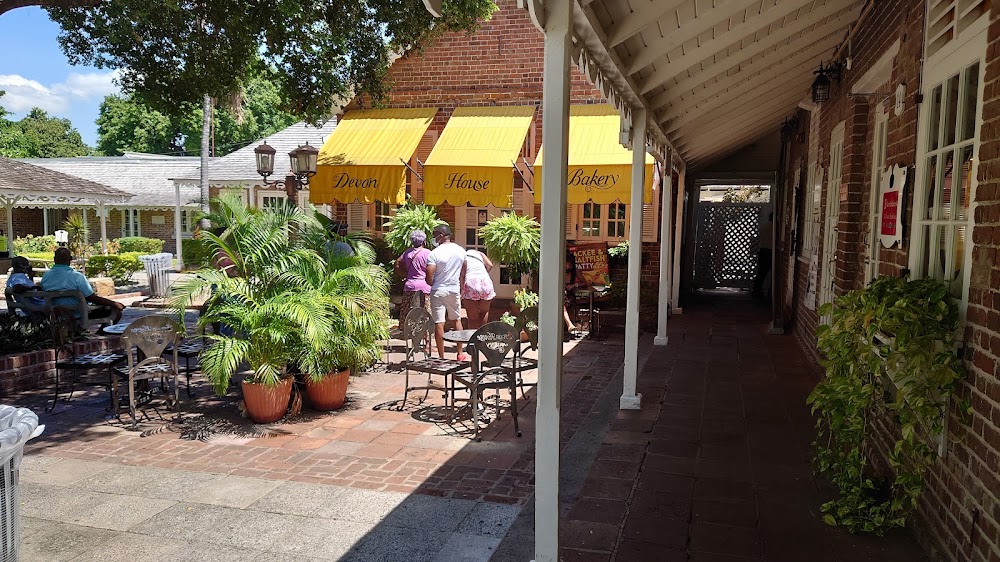
Devon House Bakery occupies what was the separate kitchen building of an 1881 mansion, and it sells very good patties. Be clear about the scale: the bakery is one small unit in an 11 acre national monument, and the queue most people are standing in is not the bakery's, it is the ice cream queue next door.
History
George Stiebel
George Stiebel was born in Jamaica around 1820, son of Sigismund Stiebel, a German Jewish merchant who had emigrated to the island, and Eliza Catherine Bailey, a Jamaican woman of African and European descent. He was a boy in a slave society. Full emancipation did not arrive until 1838.
He left school at 14 and worked for a carpenter, then at the Ferry Inn. In the 1840s his father gave him capital, he bought a ship, and he built up to three vessels trading between North and South America. He was imprisoned in Cuba over gunrunning. Then, in 1856, the ships went down in a storm off Venezuela. He survived, and the money in a belt around his waist survived with him.
He stayed in Venezuela and went into gold, becoming a shareholder in the Compania El Callao, whose mine was reported by the mid 1880s as one of the world's leading producers. He came home in 1873 rich, and eventually held ninety nine properties across the island.
Devon Pen and the house
In 1879 he bought Devon Pen, roughly 53 acres, from the Church of England, and that is where the name comes from. It was already the name of the land. He built on the foundations of the old rectory, and in 1881 commissioned the architect Charles Phillip Lazarus for the house: a 35 foot ballroom, a gaming room, a library, and jalousies calculated to move air on the hottest days. The corner of Hope Road and Waterloo Road became known as Millionaire's Corner.
Queen Victoria made Stiebel a Companion of the Order of St Michael and St George in 1891, and he was serving as Custos of St Andrew when he died at Devon House on 29 June 1896.
How it nearly got knocked down
The house passed to Stiebel's only daughter Theresa, who lived there with her children into the 1920s. It was sold to the Melhado family in 1922, and in 1928 to Cecil Lindo, whose family also owned the property up the road at 56 Hope Road that later became Bob Marley's house. It stayed a private home until the 1960s.
In 1967 the plan was to demolish Devon House and subdivide the land. According to the African Caribbean Institute of Jamaica, the government placed a preservation order on it and bought it for the nation that year, at the last minute, on the initiative of Edward Seaga, then Minister of Development and Welfare. Restoration ran through 1969, with the state craft agency Things Jamaican producing period furniture. From 1974 to 1983 the mansion housed the National Gallery of Art. Devon House was declared a national monument in 1990.
The estate's working buildings were converted rather than replaced. The carriage house and blacksmith shop became restaurants and shops, the staff quarters became the Courtyard Shops, and the detached kitchen became the bakery.
What it costs and when it opens
The grounds are free and open daily, roughly 9.30am to 10pm. The bakery runs daily from about 10am to 9.30pm. Guided mansion tours go Monday to Friday, 9.30am to 4pm, and Saturday from noon to 8pm. Published adult tour rates vary between about US$5 and US$10 depending on the source, with lower rates for children and Jamaican residents, so confirm at the desk. Patties and pastries are ordinary Kingston prices, a few US dollars each.
What it is actually like
The honest order of operations is: park, join the ice cream queue, eat, then wander. Devon House I Scream carries around 27 flavours, including soursop, guava, Blue Mountain coffee, Bordeaux cherry, and a stout flavoured one called Devon Stout. In 2011 National Geographic's Food Journeys of a Lifetime put it fourth on a global list of places to eat ice cream, and Jamaicans have never let anyone forget it.
The bakery is a smaller counter and usually a shorter wait. Patties in beef, chicken, curry goat, shrimp and lobster, plus cakes, brownies, butter cookies and pastries. It is a bakery, not a destination in itself, and works best as the savoury half of an ice cream stop.
How it fits a day
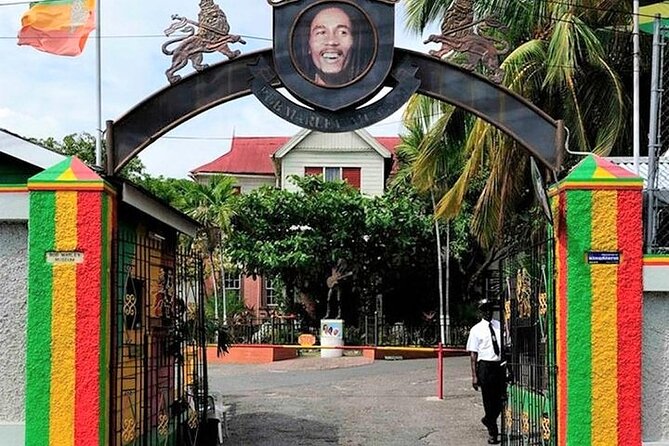
This is a stop, not a day. YaadBinge puts Devon House at midday, usually 12pm to 1.30pm, between the Bob Marley Museum five minutes north on Hope Road and whatever comes next. Ninety minutes covers lunch in the courtyard, a patty for the road, the ice cream, and a slow lap of the lawns while the queue moves.
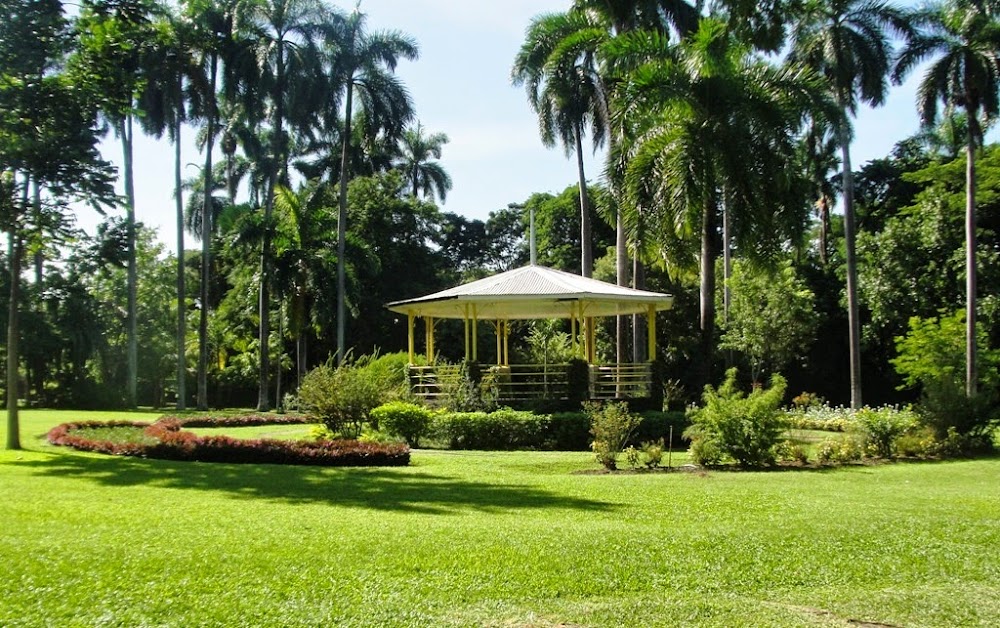
Coming down from Hope Botanical Gardens or up from downtown, it works equally well as a late afternoon break, since the grounds stay open well after the shops close.