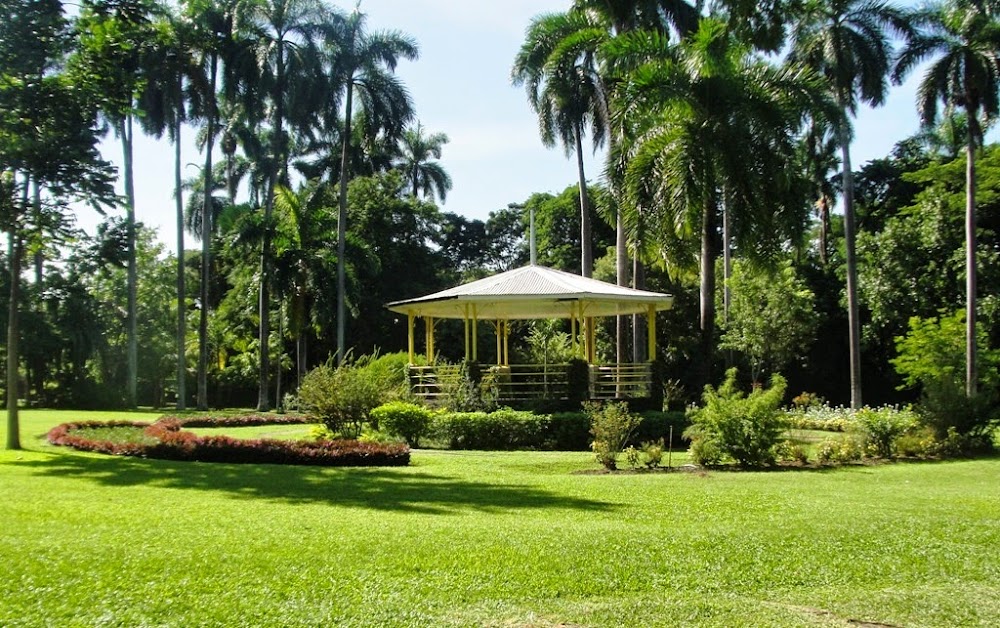
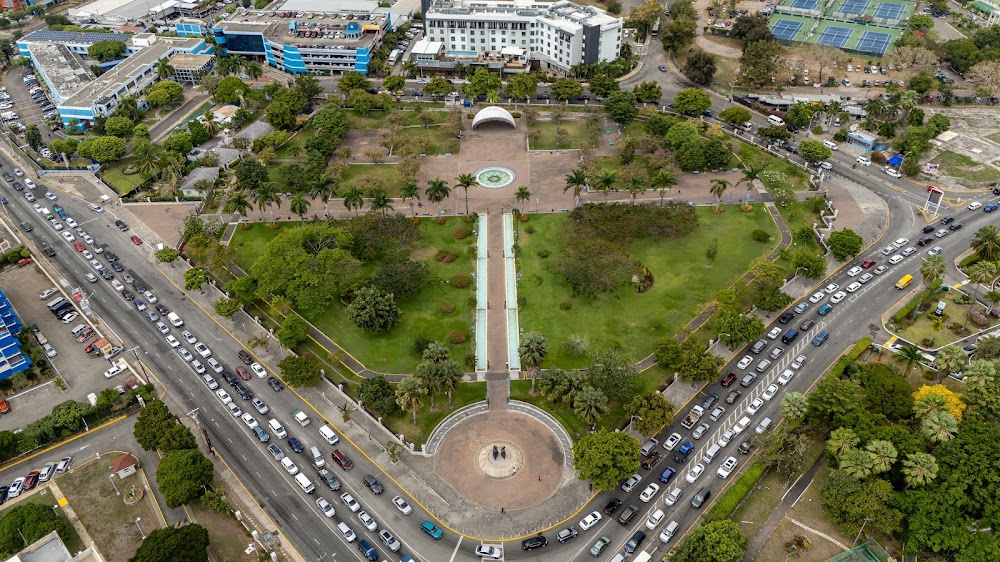
Emancipation Park is about six acres of lawn and paved track in the middle of New Kingston's office district, free, open from 5am, and used mostly by Kingstonians rather than visitors. The monument at the Oxford Road entrance set off one of the loudest public arguments in modern Jamaican cultural life, and it is worth knowing why before you stand in front of it.
History
What emancipation actually meant
The British Slavery Abolition Act took effect in Jamaica on 1 August 1834, but almost nobody walked free that day. Everyone over the age of six was reclassified as an "apprentice", still bound to work unpaid for their former owners, six years in the field and four in the house. The system was brutal enough that it collapsed early, and full freedom came on 1 August 1838. That is the date the park commemorates, which is why 2003 was the 165th anniversary.
Jamaica had an Emancipation Day holiday from 1893, then lost it in 1962, when independence arrived and the founders replaced it with a holiday for independence instead. It stayed gone for 35 years. A committee chaired by Rex Nettleford examined national symbols and observances, and in 1997 the Patterson government brought Emancipation Day back as a separate holiday on 1 August. The park was built in that revival.
The land
The ground was part of the Liguanea Club, the members' club on Knutsford Boulevard, which held more than thirty acres in the area. Around seven acres went to the government, and in 2002 Cabinet approved transferring the land to the National Housing Trust on condition a park was built and maintained there. There is a plain irony rarely stated out loud: the memorial to emancipation stands on land released by one of colonial Kingston's most exclusive private clubs.
The park opened on 31 July 2002, one day before Emancipation Day, with Prime Minister P.J. Patterson officiating. The principal architect was Kamau Kambui, with landscape design by Jenna Blackwood. Adinkra symbols from the Akan people of West Africa are worked into the perimeter fence, the entrance walls, the benches and even the bins, and the ceremonial entrance reads as a birth channel.
Redemption Song, and the row
The monument was unveiled on 31 July 2003, on the park's first anniversary. Laura Facey's work is two bronze figures, a man of about 11 feet and a woman of about 10 feet, standing knee deep in a cast iron fountain, naked, facing each other without touching, both looking up. The selection committee included David Boxer, then curator of the National Gallery of Jamaica, and Rex Nettleford, and they chose it for its spiritual character, as a sculptural prayer of thanksgiving.
Jamaica did not agree. The Jamaica Observer's account is that radio and the letters pages ran on it for weeks. Some objected to public nudity on religious grounds. A great deal of the noise was specifically about the size of the male figure's genitals, which critics read as reviving a racist stereotype rather than escaping one. And a serious strand asked whether Facey, a white Jamaican, was the right person to render the enslaved at all. On 17 August 2003 the chairman of the Emancipation Park Trust, Kingsley Thomas, said the J$4.5 million monument would stay unless the Prime Minister ordered otherwise. It stayed. In 2017 it was painted with marine paint to deal with calcium build up in the fountain, which started a second argument about conservation.
The title is from Bob Marley's Redemption Song. Marley's line about mental slavery is itself lifted from Marcus Garvey, who told an audience at Menelik Hall in Sydney, Nova Scotia, in October 1937 that others might free the body but none but ourselves can free the mind.
What it costs and when it opens
Free. Open daily from 5am, closing around 10pm or 11pm depending on the season, so check the gate if you plan a late visit. No alcohol, no drugs, no pets. Prams are allowed on the jogging track only between about 9am and 5pm, Monday to Saturday. The administration office is on 876-926-3690.
What it is actually like
It is a working city park, not an attraction, and that is the appeal. Around a thousand people pass through on an ordinary day, and holiday crowds have been put at ten times that. The 500 metre paved jogging track fills before six in the morning and again after five, when New Kingston's offices empty out. Mid morning and early afternoon it is nearly empty and very hot, because the shade is thin.
How it fits a day
Emancipation Park is a hinge, not a destination. YaadBinge uses it either at the start of a Kingston day, around 6.30am to 7.30am, when the track is busy and the traffic has not built, or at the end, around 5pm to 6.30pm, as somewhere to walk off a day of driving before dinner in New Kingston.
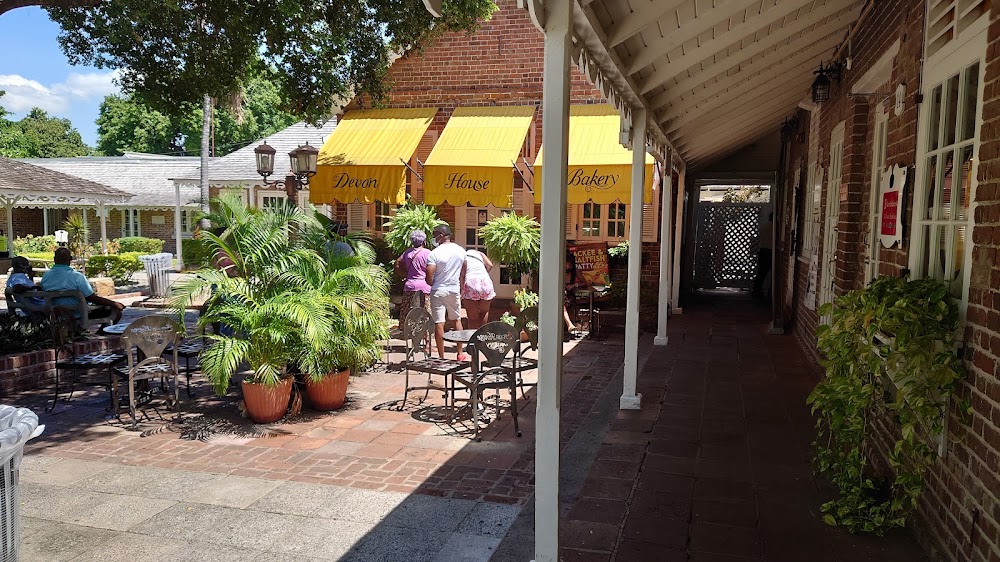
It is five to ten minutes from Devon House and ten to fifteen from the Bob Marley Museum, traffic permitting, which in New Kingston it often does not. Nothing about it needs a booking, so put it last: it absorbs delay well when the rest of the day runs late.