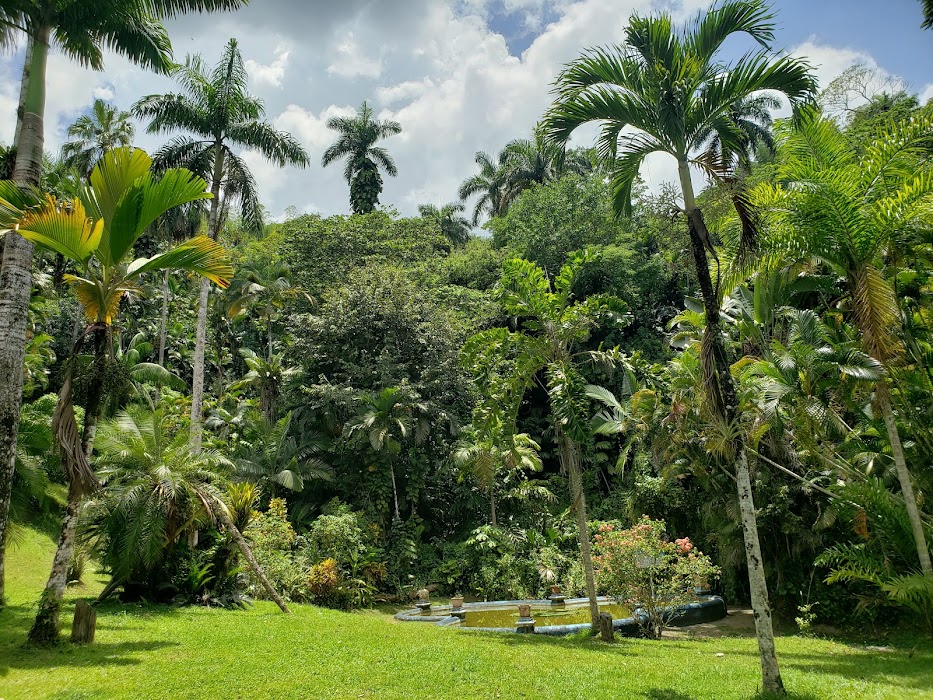
Castleton was laid out on 19 November 1862 and is one of the oldest public botanical gardens in the western hemisphere, older than most of the famous ones in North America. It sits on both sides of the Junction road in St Mary with the Wag Water River running through it, and entry costs less than a US dollar. The honest catch is that it is a working government garden that has been knocked about by a century and a half of hurricanes and neglect, so you are seeing a great collection in reduced condition.
History
It exists because Bath kept flooding
Jamaica's first botanic garden was at Bath in St Thomas, founded in 1779. It sat beside a river that flooded repeatedly and washed out the beds, and by the middle of the nineteenth century it was clear the collection had to move somewhere drier and higher. The Jamaica National Heritage Trust records the founding date as 19 November 1862, describing Castleton as the replacement for a site at Bath that had proved unsatisfactory. Plants were carried over from Bath and the new garden was stocked from the Royal Botanic Gardens at Kew in London.
The man behind both is Nathaniel Wilson, superintendent of the Bath garden from 1846, who chose the Castleton site and directed the planting between 1860 and 1862. He is barely remembered outside horticultural literature, which is a shame, because the shape of the garden you walk through is his.
What actually came through this garden
This is the surprising part. Castleton was not a display garden. It was an introduction station, the place where new economic and ornamental species were brought into the island, grown on, and distributed to estates and small farmers. The JNHT lists poinciana, the Bombay mango, spathodea, the navel orange and the tangerine among the species introduced through here. If you have eaten a tangerine in Jamaica or stood under a flame tree in June, the line runs back to this hillside.
By the end of the nineteenth century the collection was extraordinary. Records put it at more than four thousand species of plant, with one hundred and eighty species of palm in the palmetum by 1897, which made it the most richly stocked garden in the Caribbean. Among the specimens still standing are strychnos, the tree that gives strychnine, along with velvet apple, West Indian mahogany and coffee.
The river's name is three languages deep
The Wag Water is not an English name that got mangled. It is a Taino name that the Spanish mangled and then the English mangled again. The Taino called it Guaiguata. The Spanish heard Agua Alta, high water. The English heard Wag Water and wrote that down. Three colonisations are stacked inside two words, and the river is still called the third one.
The damage, and the money
Castleton has been hit repeatedly. Hurricanes have taken out mature trees across the collection more than once, notably the 1903 storm and the 1944 hurricane that crossed the north of the island on 20 August with 120mph winds, and long stretches of thin government funding did the rest. Old specimen trees, once lost, cannot be replaced inside a human lifetime.
In May 2025 the government announced a J$234 million restoration of the gardens under the Jamaican Path from Hills to Oceans project, funded jointly with the European Union. The work covers gabion walls along the river to stop land slipping, a perimeter fence, and rebuilt bathrooms and gazebos. Expect to see works in progress rather than a finished park.
One commonly repeated claim deserves a flag. Many listings say the land belonged to an English planter called Colonel Castle who gifted it to the government in 1869. The name is plausible for an estate called Castleton, but the heritage and government sources do not confirm it, so treat it as unverified.
What it costs and when it opens
Very little. Recent visitor reporting puts admission at around J$100 for adults and J$50 for children, under US$1 either way. Gates are open daily through daylight hours, roughly 6am to 6pm. Groundsmen will offer to walk you round and name the trees, which is worth taking and worth tipping for, a few hundred Jamaican dollars is normal. Bring small notes, there is no card machine.
What it is actually like
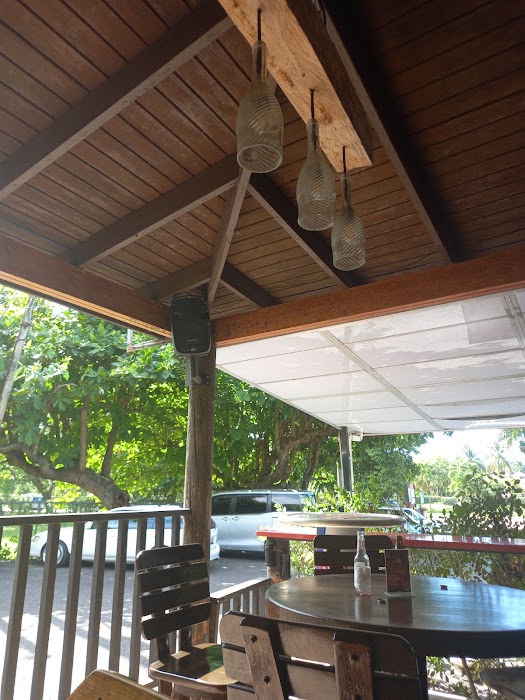
Quiet, green and slightly wild. The garden straddles the road: stone paths, lawns and the tree collection on one side, river access and basic facilities on the other. It is not manicured, and labelling is patchy, which is exactly why a guide is worth it.
The Wag Water here runs shallow and clear over stones, ankle to waist deep in the swimming spots, and Jamaican families use it far more than tourists do. Weekday mornings you may have the whole place to yourself.
What to bring
- Small Jamaican notes for entry and for the guide
- Insect repellent, it is damp shaded ground
- Shoes you can get wet if you plan to go in the river
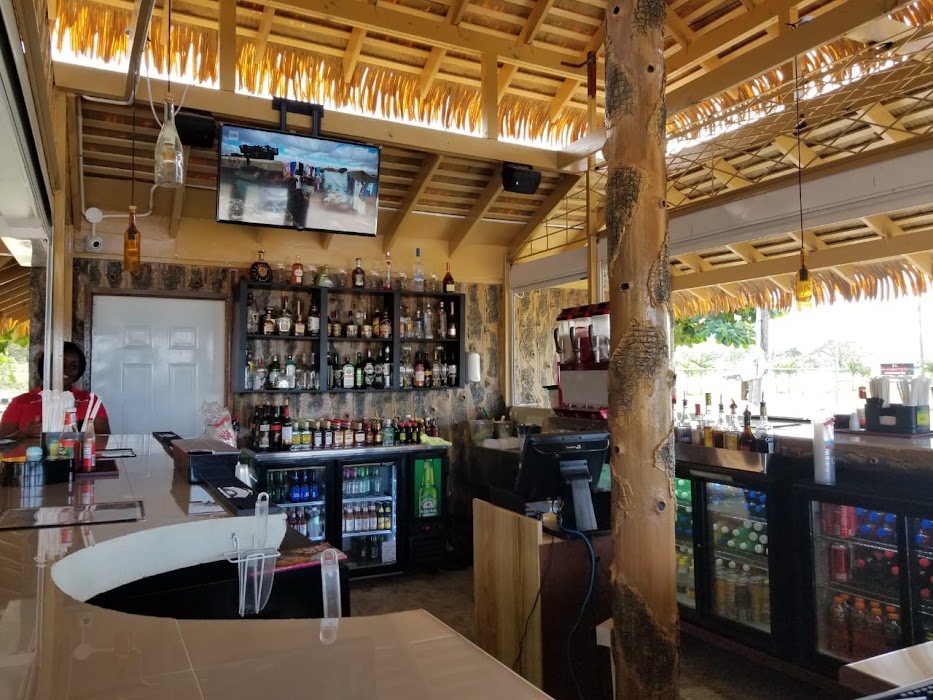
- Your own water and snacks, the bar is small and not always open
How it fits a day
Castleton is not an Ocho Rios morning, and it is honest to say so. It sits on the Junction road roughly 19 miles north of Kingston, and it works best as the stop that breaks the drive between Kingston and the north coast.
YaadBinge uses it as a mid morning pause, around 10am to 11.30am, coming out of Kingston with the north coast still ahead. Ninety minutes covers the tree walk, a dip in the river and a sit down. Coming the other way, it is a good last stop at about 3pm.