Green Grotto is a 1,525 metre limestone cave system on the coast between Runaway Bay and Discovery Bay, with an underground lake at the bottom of it. Two honest catches: it is not in Ocho Rios, it is roughly 30 to 40 minutes west by road, and the tour is a guided walk on a fixed route, not caving.
History
Five names, five uses
The caves have been called Runaway Caves, Rum Caves, Dairy Caves, Hopewell Caves and Dry Harbour Caves at different points. Each name is a record of who was using them at the time, which is unusual and makes the place easier to read than most Jamaican heritage sites. The current name comes from the green algae growing on the walls near the light.
Taino, then Spanish
The Taino were first. Pottery fragments and stone tools recovered from the caves indicate they used them for shelter, which is consistent with cave use across the island before 1494.
The Spanish came next, and not by choice. An English fleet took Jamaica in 1655, but the Spanish did not simply leave. Don Cristóbal Arnaldo de Ysassi was appointed the last Spanish governor in 1656 and fought a holding war from the bush and the coast for four more years. On 3 May 1660 he and 66 remaining Spaniards put to sea from this stretch of coast and reached Cuba six days later. That departure is the usual explanation for the name Runaway Bay.
The eighteenth century
People escaping slavery hid in these caves. That is the origin of the Runaway Caves name and it is the plainest fact on the site: the chambers are dark, cool, hard to search, and they have more than one way in. What looks to you like a lighting scheme and a handrail was, for somebody else, the difference between recapture and not.
Rum, guns and Roger Moore
Between the two world wars the caves were used by smugglers running arms to Cuba. During the Second World War the Government of Jamaica stored barrels of rum at the cave entrance, which is where Rum Caves comes from.
Then in 1973 the caves played Dr Kananga's underground base in Live and Let Die, Roger Moore's first outing as Bond, with Jamaica standing in for the fictional island of San Monique. Ian Fleming, who wrote the novel at Goldeneye on this same coast, had already put real Jamaican caves into the book as part of a smuggling plot. The film crew came and found the caves had been doing the job for three centuries already.
Now
The site is owned by the Urban Development Corporation and run by the St Ann Development Company. Nine of Jamaica's twenty one bat species live in the system, so the caves remain a working piece of ecology rather than a set.
What it costs and when it opens
Open daily, roughly 9am to 4pm. Admission is around US$20 for adults and US$10 for children aged 4 to 12, with a reduced rate for Jamaican residents on production of ID. Children under 4 are not admitted. The price includes a guide, a hard hat and a drink. Budget about 45 minutes to an hour underground.
What it is actually like
You go down about sixty steps with a guide and a group. The route is lit and railed, the air is cool and damp, and the ceiling drops low enough in places that the hard hat is doing a job rather than making a point. Guides in Jamaica are paid partly on tips, and the good ones here are genuinely good on the history, so carry small notes.
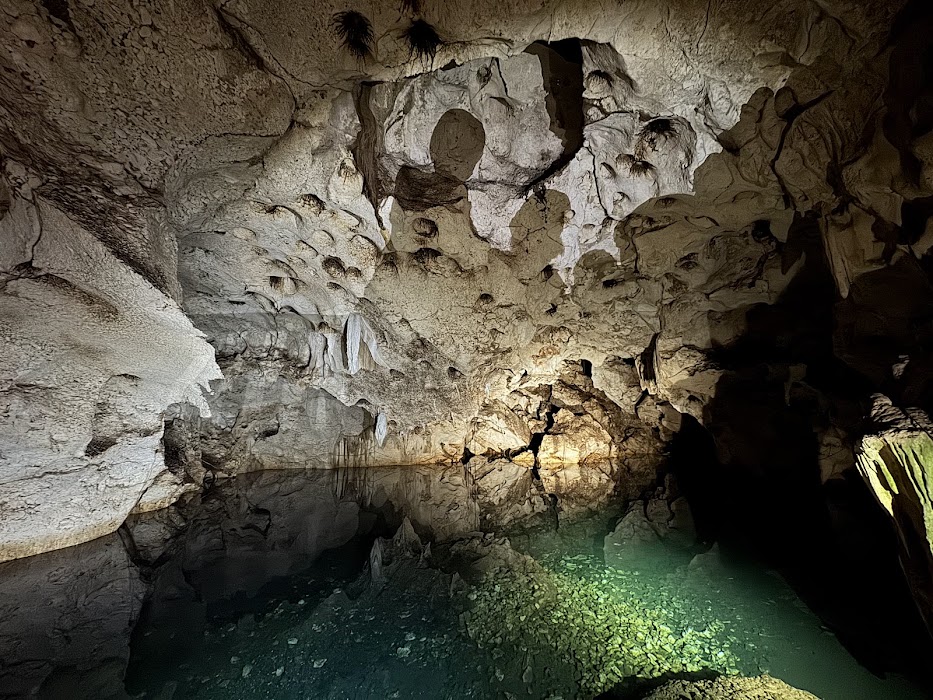
The lake at the bottom is the payoff, still and clear, with formations visible below the waterline that show the level has moved over time. You do not swim in it.
Crowds arrive with the cruise buses, in a lump, mid morning to early afternoon. Before 10am or after 2.30pm you may get a small group and a guide with time to talk.
What to bring
- Closed shoes with a grip sole
- Small Jamaican notes for the guide
- A light layer, it is cooler underground than you expect
- A phone or camera that copes with low light
How it fits a day
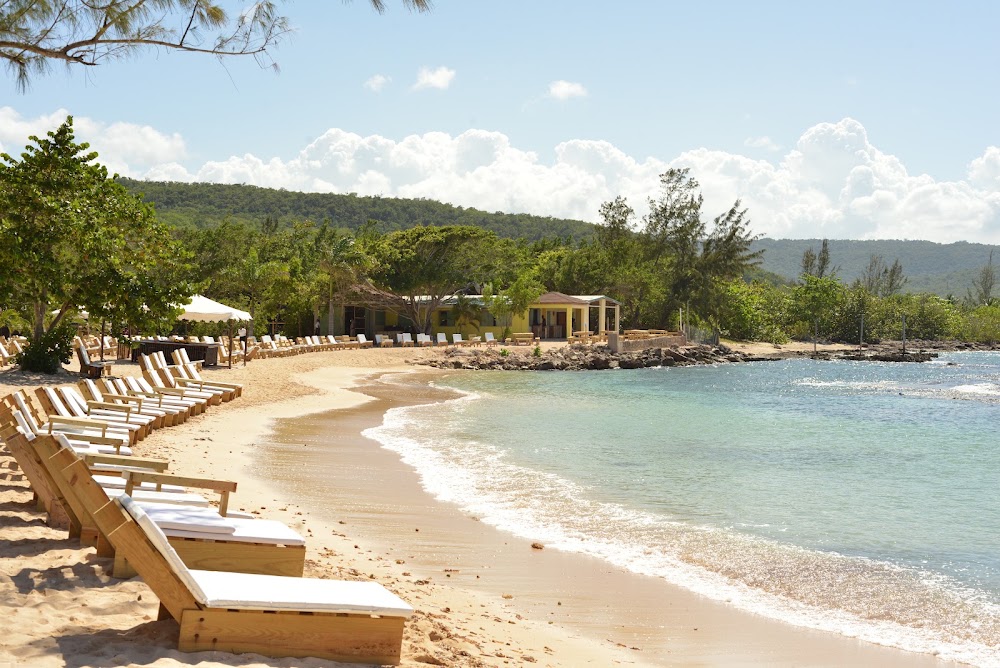
YaadBinge uses Green Grotto as the morning half of a westward day, arriving for the 9am opening and out by about 10.30am, before the buses. Puerto Seco Beach in Discovery Bay is minutes away, and Ocho Rios is an easy run back east for the afternoon.
It also works in reverse: falls or river in the morning, caves around 2.30pm, back into Ocho Rios by 4.30pm. What it does not do is fit a rushed cruise stop alongside two other attractions. The drive each way is real.